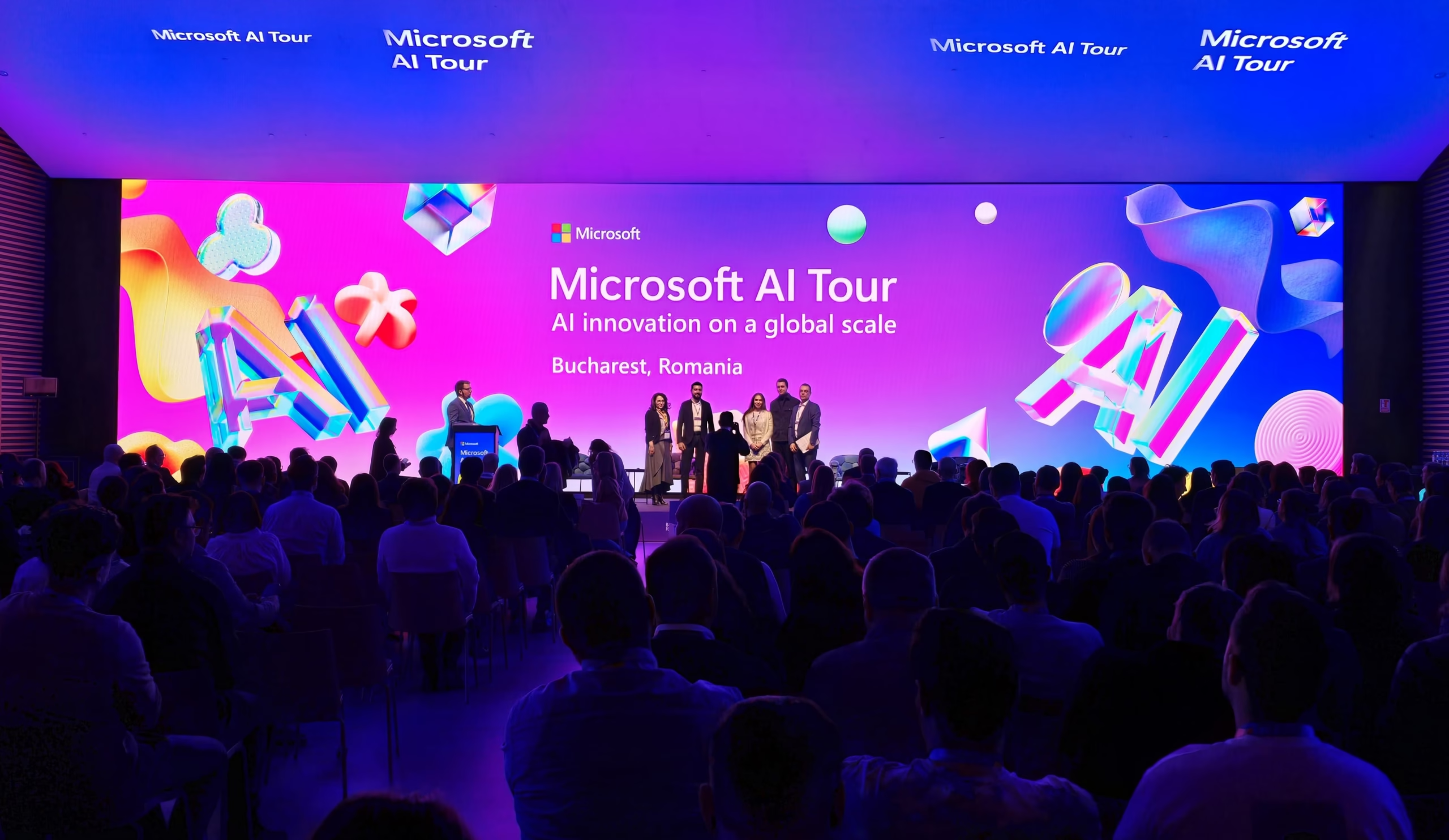
AI-driven attacks become more sophisticated. Organizations must adopt robust security strategies to mitigate risks. This summary captures the key insights from the Microsoft AI on Tour event, focusing on how AI is reshaping security strategies and the measures organizations must take to stay protected.
The Growing Cyber Threat Landscape
- Deepfake Scams: AI-generated deepfake scams have become a serious challenge, with businesses losing millions due to highly convincing impersonations. A recent case saw a company lose $26 million due to AI-driven fraud.
- Evolving Attack Surfaces: AI introduces new vulnerabilities such as prompt injections, jailbreaks, and data leaks. Hackers exploit these weaknesses to bypass security protocols.
- Graph-Based Attacks: Cybercriminals leverage interconnected digital systems, targeting emails, identities, and cloud applications for large-scale breaches.
- Phishing and Credential Exploitation: The median time for cybercriminals to exploit stolen credentials is now just 72 minutes, emphasizing the need for real-time threat detection.
Microsoft’s Secure Future Initiative
To address these threats, Microsoft has implemented the Secure Future Initiative, which is based on three core principles:
- Security by Design: Integrating security measures at every stage of AI and software development.
- Security by Default: Ensuring that security features are built into products without requiring manual activation.
- Security by Operations: Proactively monitoring and responding to cyber threats in real time.
Trustworthy AI: A Responsible Approach to AI Security
The adoption of AI must be accompanied by a commitment to privacy, safety, and compliance. Microsoft promotes Trustworthy AI, ensuring that user data is protected through:
- Full Data Ownership: Users retain complete control over their data.
- Privacy-First AI: AI models are not trained on customer data, preventing unauthorized data usage.
- Enterprise-Grade Security: AI-driven security tools provide comprehensive compliance and threat mitigation.
AI-Powered Security Innovations
AI is not only a threat but also a powerful tool for cybersecurity. Microsoft’s latest innovations include:
- Zero Trust Security Model: Continuous verification and least-privilege access to reduce attack surfaces.
- Copilot for Security: AI-driven security assistant that accelerates incident response.
- Extended Detection and Response (XDR): Advanced analytics that proactively identifies and mitigates threats.
The CISO Evolution: AI in Leadership & Business Strategy
The role of Chief Information Security Officers (CISOs) has evolved beyond IT security. Today, CISOs must align cybersecurity with business strategy, integrating security measures at the board level to proactively address risks.