As AI matures, geopolitics reshapes innovation, and startups face a tougher funding environment, Web Summit returns to Lisbon with a bigger question than ever before: what’s next for technology?
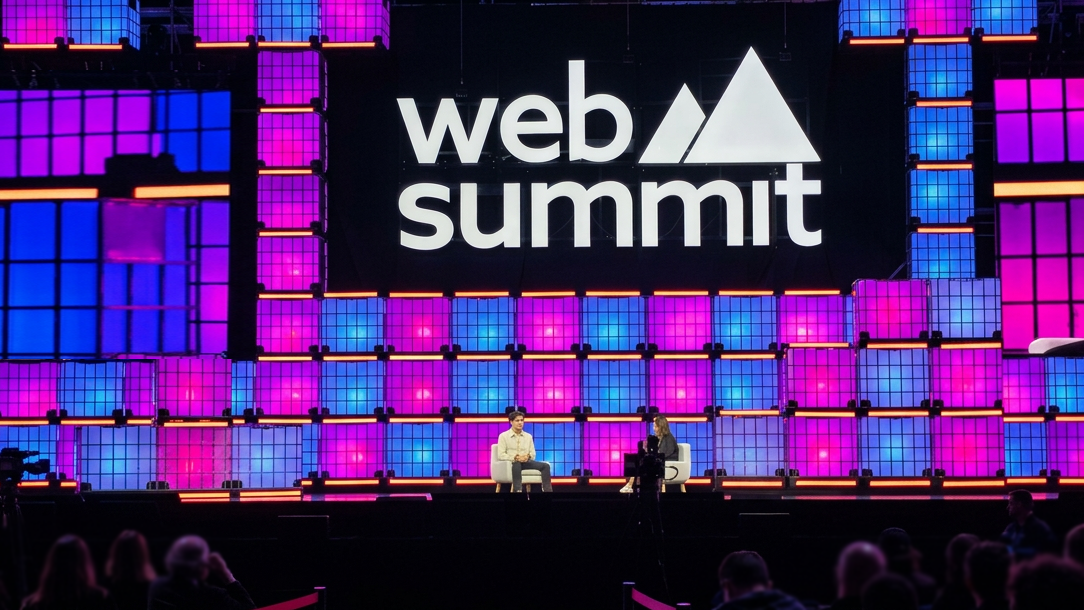
From November 9 – 12, 2026, more than 70,000 founders, investors, executives, policymakers, journalists, and technology professionals are expected to gather once again in Lisbon for Web Summit, one of the world’s largest and most influential technology events. Hosted at the MEO Arena and FIL exhibition center, the event has become a yearly checkpoint for understanding where technology is heading, and, increasingly, who gets to shape that future.
For nearly two decades, technology conferences have often been associated with product launches, funding announcements, and bold predictions. Web Summit still delivers all of those. But the event’s significance today goes beyond unveiling the next startup success story.
In 2026, the conversations surrounding technology are fundamentally different.
- Artificial Intelligence is no longer an emerging trend. It is becoming infrastructure.
- Startups are operating in a market where efficiency often matters more than growth-at-all-costs.
- Governments are taking a more active role in shaping digital sovereignty, regulation, and AI policy.
- And organizations across every industry are asking the same question: how do we turn technological possibility into sustainable business value?
That is why Lisbon continues to matter.
More than a technology conference
Often described as the “Glastonbury for geeks” and “the world’s premier tech conference”, Web Summit has evolved into a global platform where technology, business, media, investment, and public policy increasingly intersect. The event now attracts participants from more than 150 countries and serves as a meeting point for startups, venture capital firms, multinational corporations, government representatives, and industry leaders.
What makes Web Summit particularly relevant is not simply its size, but its ability to capture emerging shifts before they become mainstream. The startups pitching today often become tomorrow’s unicorns, the policy debates taking place on stage frequently foreshadow future regulation, and the technologies showcased in Lisbon often define business conversations for years to come.
The AI conversation has entered a new phase
If the past two editions were dominated by excitement around generative AI, 2026 is likely to focus on something more practical: implementation.
Across industries, the discussion is shifting away from experimentation and toward execution. Organizations are asking how AI can improve productivity, transform customer experiences, optimize operations, and generate measurable business outcomes.
At the same time, new questions are emerging around governance, trust, security, ownership, and the growing role of autonomous systems. This transition from curiosity to operational reality will likely shape many of the conversations taking place throughout Lisbon.
The AI race is no longer about who has access to the technology. It is increasingly about who can create the most value from it.
Startups, capital, and the search for sustainable growth
For founders and investors, Web Summit remains one of the most important networking and business development opportunities of the year.
Thousands of startups are expected to participate alongside investors managing billions in capital. The event continues to serve as a launchpad for fundraising conversations, strategic partnerships, customer acquisition opportunities, and international expansion.
But the startup landscape of 2026 looks very different from the market many founders experienced only a few years ago. Investment decisions have become more selective, business fundamentals matter more, and investors increasingly prioritize resilience, profitability, and clear market demand.
As a result, many of the most interesting conversations at Web Summit may not focus on growth at any cost, but on building sustainable companies capable of navigating uncertainty.
Europe’s growing role in global innovation
One of the most interesting developments in recent years has been Europe’s increasing confidence as a technology player. As discussions around AI sovereignty, semiconductor independence, cybersecurity, digital infrastructure, and climate technology intensify, Europe is becoming more active in defining its own innovation agenda.
Web Summit provides a unique lens through which to observe these shifts, and Lisbon increasingly serves as a meeting point where European priorities intersect with global ambitions, creating conversations that extend far beyond technology itself.
Watching Romania’s voice in Lisbon
For How About Tech, Web Summit 2026 will also be an opportunity to look closely at Romania’s presence on the global innovation stage.
In the past two years, Romanian representation at Web Summit has grown beautifully, with more founders, startups, investors, tech professionals, and ecosystem builders showing up in Lisbon not only as participants, but as active voices in the conversation.
That momentum matters. Because representation at a global event like Web Summit is not only about visibility. It is about access to capital, partnerships, markets, ideas, and networks that can help local innovation travel further.
This year, we are especially eager to see how Romanian startups and tech companies position themselves, what stories they bring to the table, and how the local ecosystem continues to connect with the wider European and global technology landscape.
Looking ahead
As Web Summit 2026 approaches, the event arrives at a pivotal moment for the technology industry, when AI is moving from experimentation to everyday business reality, startups are operating in a more disciplined market where sustainable growth matters as much as innovation, governments are playing an increasingly active role in shaping digital futures, while organizations across every sector are looking for practical outcomes rather than futuristic promises.
If previous editions were focused on exploring what technology could become, Web Summit 2026 may be remembered for addressing a more important question: what kind of future are we actively building?
For me, however, the true value of Web Summit has never been confined to the stages, keynotes, or headline announcements.
The most meaningful moments often happen in the spaces between sessions, during a conversation with a founder who is building the next big thing, an unexpected meeting with an investor, a late-night discussion over dinner, or a chance introduction that eventually turns into a partnership.
That is what makes Lisbon special.
For four days each November, the city becomes one of the world’s most concentrated hubs of founders, investors, innovators, policymakers, and technology leaders. The density of talent, ideas, and opportunities creates an environment that is difficult to replicate anywhere else.
And perhaps that is why, year after year, Web Summit remains one of the best places to understand not only where technology is heading next, but who will help shape its future.
Looking back on How About Tech’s coverage of Web Summit 2025
Before heading into Web Summit 2026, revisit our on-the-ground coverage from last year’s edition:
- Web Summit 2025 Opens with a Power Shift: Pix, Poland and Sovereign AI Take Center Stage
- Web Summit 2025 Day 1: On the Ground in Lisbon – AI Grows Up and Gets Practical
- Web Summit 2025 Day 2: AI Steps Off the Screen and Into the Real World
- Web Summit 2025 Day 3: Health OS, Query-Based Media and the Race to Zero-Delay Money