
Intel has unveiled its latest lineup of processors, the Core Ultra 200 series, aimed at enhancing performance across a spectrum of laptops, from high-end gaming rigs to ultra-portable devices. This new series includes the 200HX, 200H, and 200U processors, each tailored to specific user needs.
Core Ultra 200HX Series: Powering Next-Gen Gaming Laptops
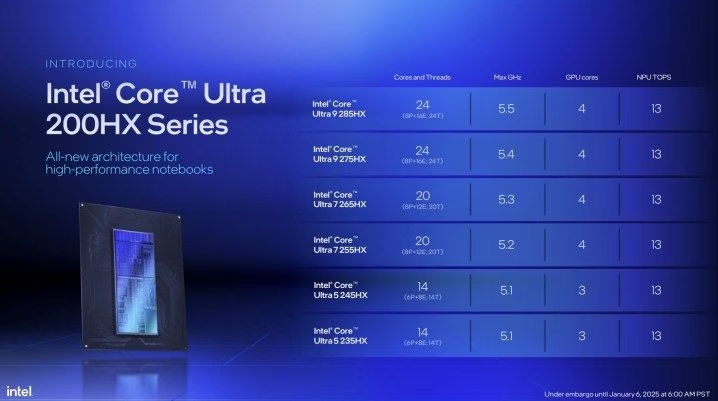
The 200HX processors are engineered for gaming enthusiasts and professionals requiring top-tier performance. The flagship model, the Core Ultra 9 285HX, boasts 24 cores—comprising 8 performance (P) cores and 16 efficiency (E) cores—with a maximum boost clock of 5.5GHz. This configuration ensures exceptional multitasking capabilities and seamless handling of resource-intensive applications. Notably, these processors are designed to be paired with discrete GPUs, such as Nvidia’s anticipated RTX 50-series, to deliver unparalleled gaming experiences. Laptops featuring the 200HX series are expected to be available in the first quarter of 2025.
Core Ultra 200H Series: Balancing Performance and Portability
Positioned a tier below the HX series, the 200H processors cater to users seeking a balance between performance and mobility. The top model in this range, the Core Ultra 9 285H, offers up to 16 cores and a peak boost clock of 5.4GHz. These processors are ideal for high-end thin and light laptops, providing robust performance without needing a discrete graphics card. The 200H series is also slated for release in the first quarter of 2025.

Core Ultra 200U Series: Efficiency for Ultra-Portable Devices
The 200U series targets ultra-portable and energy-efficient laptops, emphasizing battery life and compact design. While specific specifications have not been disclosed, these processors are expected to feature lower power consumption, making them suitable for devices where portability is paramount. The release timeline for the 200U series has not been specified, but they are anticipated to follow the launch of the HX and H series.
Technological Innovations Across the Series
A significant shift in this generation is the absence of Hyper-Threading support. Instead, Intel has optimized the architecture to leverage efficiency cores for most tasks, activating performance cores for more demanding workloads requiring higher boost clock speeds. This design aims to enhance overall efficiency and performance across various use cases.
Additionally, the integration of advanced AI capabilities, such as Intel’s NPU (Neural Processing Unit), enhances tasks like AI-driven system controls and offline AI features, contributing to a more responsive and intelligent computing experience.
Read more on Intel Newsroom