Albania has taken a decisive step in the growing global debate over social media regulation, announcing a one-year ban on TikTok. This move places the Balkan nation among a rising number of countries adopting strict measures to address concerns about the platform’s impact on youth.
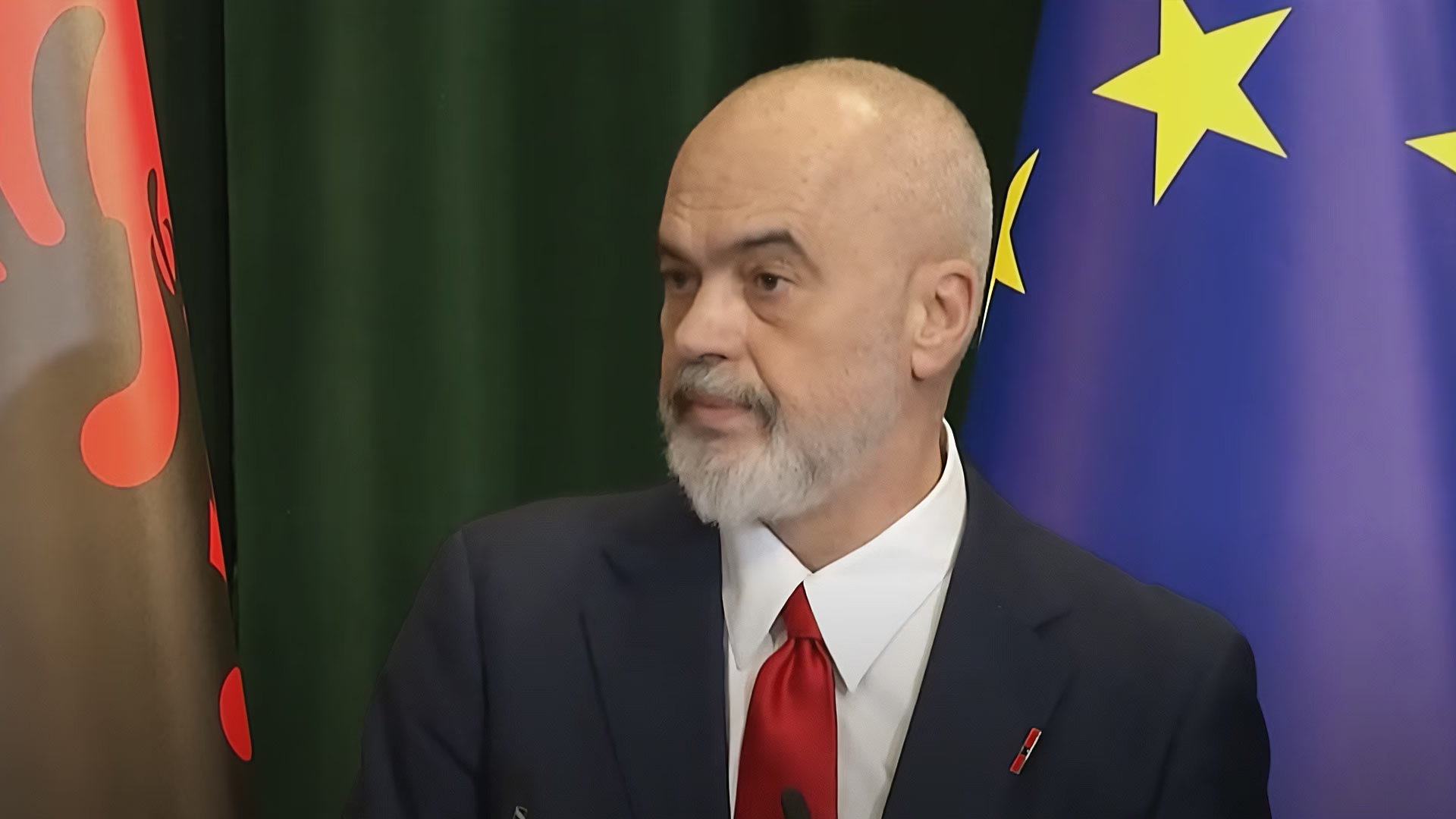
The ban follows widespread protests and political unrest sparked by a tragic incident in November: the murder of a 14-year-old boy by a classmate who subsequently shared images of the crime on Snapchat. Prime Minister Edi Rama directly linked the surge in youth violence to the influence of social media, with TikTok singled out as a particular culprit.
“TikTok will not exist in the Republic of Albania,” said Rama during a recent address. “TikTok is the thug of the neighborhood. We are going to chase this thug out of our neighborhood for one year.”
The ban is part of a broader initiative by the Albanian government to address the perceived dangers of social media on young people. Prime Minister Rama has spent the last month consulting with teachers, students, parents, and psychologists to tackle fears over the impact of online platforms on children’s mental health and behavior. In addition to the ban, the government plans to introduce new educational programs aimed at empowering children and supporting parents, though further details have not yet been disclosed.
Albania’s decision aligns with a global shift towards increased regulation of social media platforms, particularly TikTok, which has faced scrutiny over its data practices and potential influence on users. Countries across North America, Europe, and Asia have implemented a range of measures to safeguard minors.
In the United States, a TikTok divestiture requirement, which functions as a de facto ban, is scheduled to take effect on January 19. The Supreme Court is set to hear appeals arguing that such measures violate free speech. Meanwhile, a bipartisan bill introduced in May proposes banning social media access for children aged 13 and younger.
Australia has taken perhaps the most aggressive stance, passing an outright ban in November on social media use for individuals under 16. This law applies to TikTok and platforms like Instagram, Facebook, X (formerly Twitter), and YouTube. Responsibility for enforcement falls on social media companies themselves. The U.K. is currently debating similar legislation.
Despite these moves, experts remain divided on the effectiveness of outright bans. A recent report by the National Academies of Sciences, Engineering, and Medicine highlighted the lack of robust evidence linking social media directly to negative mental health outcomes. The report stopped short of endorsing platform bans, advocating instead for stronger industry standards and greater transparency from tech companies.
Albania’s one-year TikTok ban underscores the intensifying global conversation about the role of social media in society. While some see such measures as necessary to protect children, others argue for a more nuanced approach that balances safety with personal freedoms.