
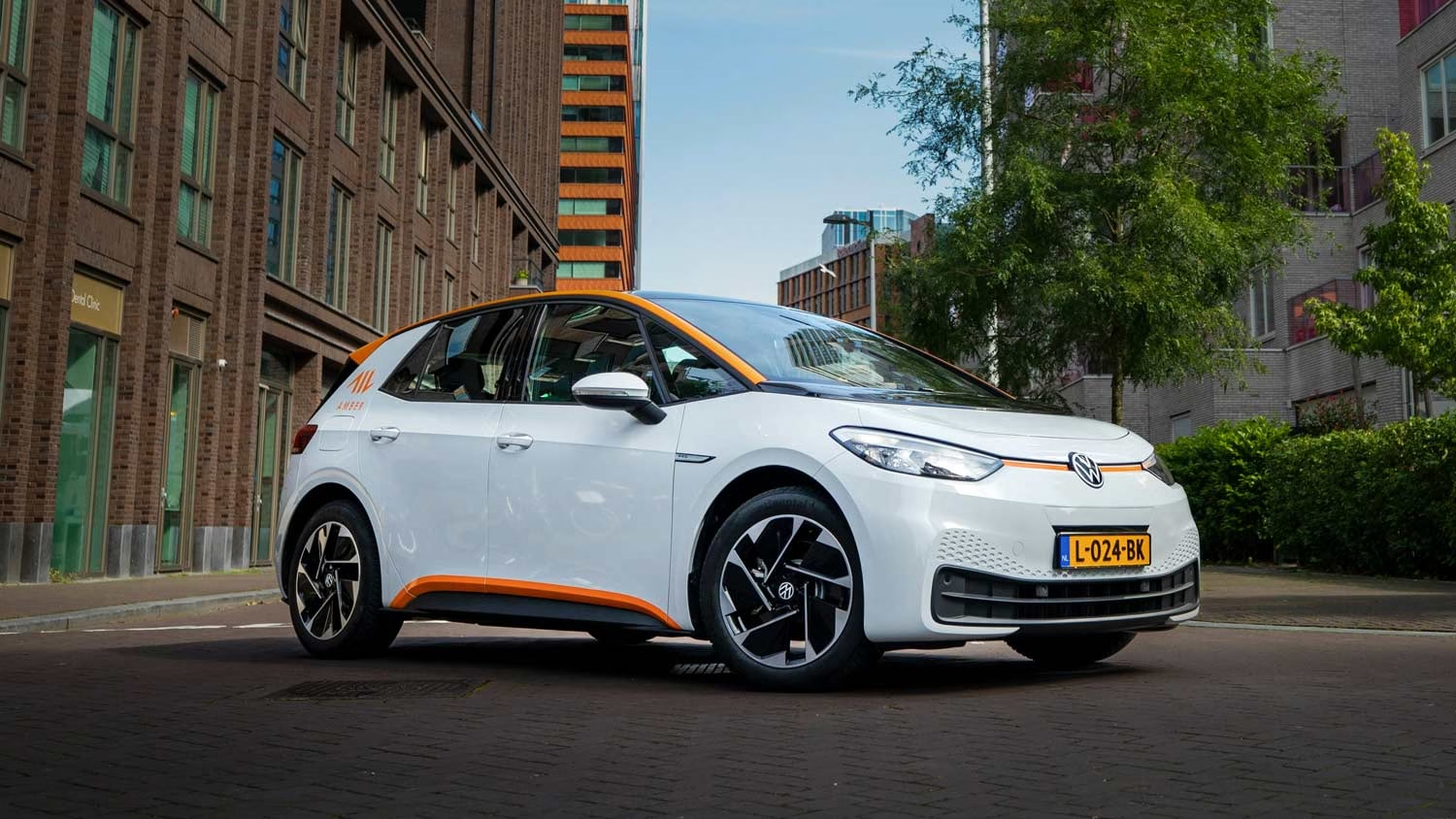
Global Deliveries Show Resilience Amid Complex Market Conditions
Volkswagen AG reported a 1.2% increase in global vehicle deliveries for the second quarter of 2025, reaching 2.27 million units. This growth continued into the first half of the year, with 4.41 million vehicles delivered, marking a 1.3% rise compared to the same period in 2024. The company’s performance comes despite geopolitical tensions, fierce competition from Chinese automakers, and fluctuating regional demand.
To offset declines in North America and parts of Europe, Volkswagen relied on strong electric vehicle (EV) sales and robust performance in emerging markets, particularly South America. The company’s ability to adapt to shifting market dynamics highlights its resilience but also underscores the challenges ahead.
Regional Performance: A Mixed Picture
1. North America: Sharp Decline Due to Tariffs and Weak Demand
Volkswagen faced a 16.2% drop in Q2 deliveries in North America, totaling 224,700 units. The U.S. market was particularly tough, with Volkswagen of America reporting a nearly 29% decline. Key models like the Tiguan, Taos, and Atlas saw reduced sales, while the ID.4 electric SUV plummeted by 65% due to a 25% U.S. import tariff on European-made vehicles. The Golf R was the sole bright spot, with a 12% increase.
2. Western Europe: Stable Despite Subdued Demand
Deliveries in Western Europe dipped slightly by 0.7%, but the region remains crucial for Volkswagen’s electrification push. One in five vehicles delivered was fully electric, with strong demand for new models like the ID.7 Tourer and Audi Q6 e-tron. Germany, in particular, saw a 1.9% increase, driven by growing interest in battery-electric (BEV) and plug-in hybrid (PHEV) models.
3. China: Steady Growth Amid Intense Competition
As Volkswagen’s largest single market, China provided stability with a 2.8% increase in Q2 deliveries (669,700 units). The company avoided the price war in China’s EV sector, focusing instead on profitability and strengthening its internal combustion engine (ICE) lineup. However, competition from BYD, Nio, and other Chinese EV makers is intensifying, putting pressure on Volkswagen’s market share.
4. South America: Strong Growth Driven by Local Production
South America was a standout performer, with deliveries rising 18.3% year-on-year to 302,100 units. Brazil led the charge, recording a 7.4% sales increase, thanks to successful local production investments and model adaptations.
5. Central & Eastern Europe: Recovery Fuels Demand
The region saw an 8.5% increase in deliveries, reflecting economic recovery and steady demand for conventional and hybrid vehicles.
Electrification Gains Momentum
Volkswagen’s BEV deliveries surged by 37.6% in Q2, reaching 248,700 units. For the first half of 2025, BEV sales hit 465,500 units (up 48%), while PHEV deliveries grew by 41% to 192,300 units. Electrified models now account for over 11% of total sales, up from 7% in H1 2024.
Key Markets for EV Growth:
- Western Europe: BEV deliveries jumped 89% in H1, led by the ID.4/ID.5 (43,700 units), ID.3 (28,100 units), and Audi Q4 e-tron (22,800 units).
- U.S.: EV sales grew by 24%, but the ID.4’s decline due to tariffs remains a concern.
- China: BEV deliveries fell 34%, as local brands dominate the market.
Challenges Ahead
1. U.S. Tariffs Disrupt Supply Chains
The 25% tariff on European-made EVs has hurt profitability, forcing Volkswagen to consider absorbing costs or raising prices. The company is lobbying for tariff reductions, but the outcome remains uncertain.
2. Rising Competition from Chinese Automakers
Chinese brands like BYD, Nio, and Chery are expanding globally with affordable, high-tech EVs, challenging Volkswagen’s market position. While Volkswagen relies on brand loyalty and quality, it must accelerate innovation to stay competitive.
3. Balancing Brand Portfolio Complexity
With multiple brands (VW, Audi, Porsche, Škoda, SEAT, CUPRA), Volkswagen faces internal competition and potential cannibalization. Managing economies of scale while preserving brand identity is a key strategic challenge.
4. Pressure on Profit Margins
Despite rising EV sales, profit margins remain thin (around 4% in Q1 2025) due to high battery costs and R&D investments. Maintaining profitability while funding the electric transition will be critical.
A Company in Transition
Volkswagen’s Q2 performance demonstrates resilience, especially compared to other German automakers reporting declines. Growth in EV sales and emerging markets is promising, but challenges like U.S. tariffs, Chinese competition, and margin pressures loom large.