
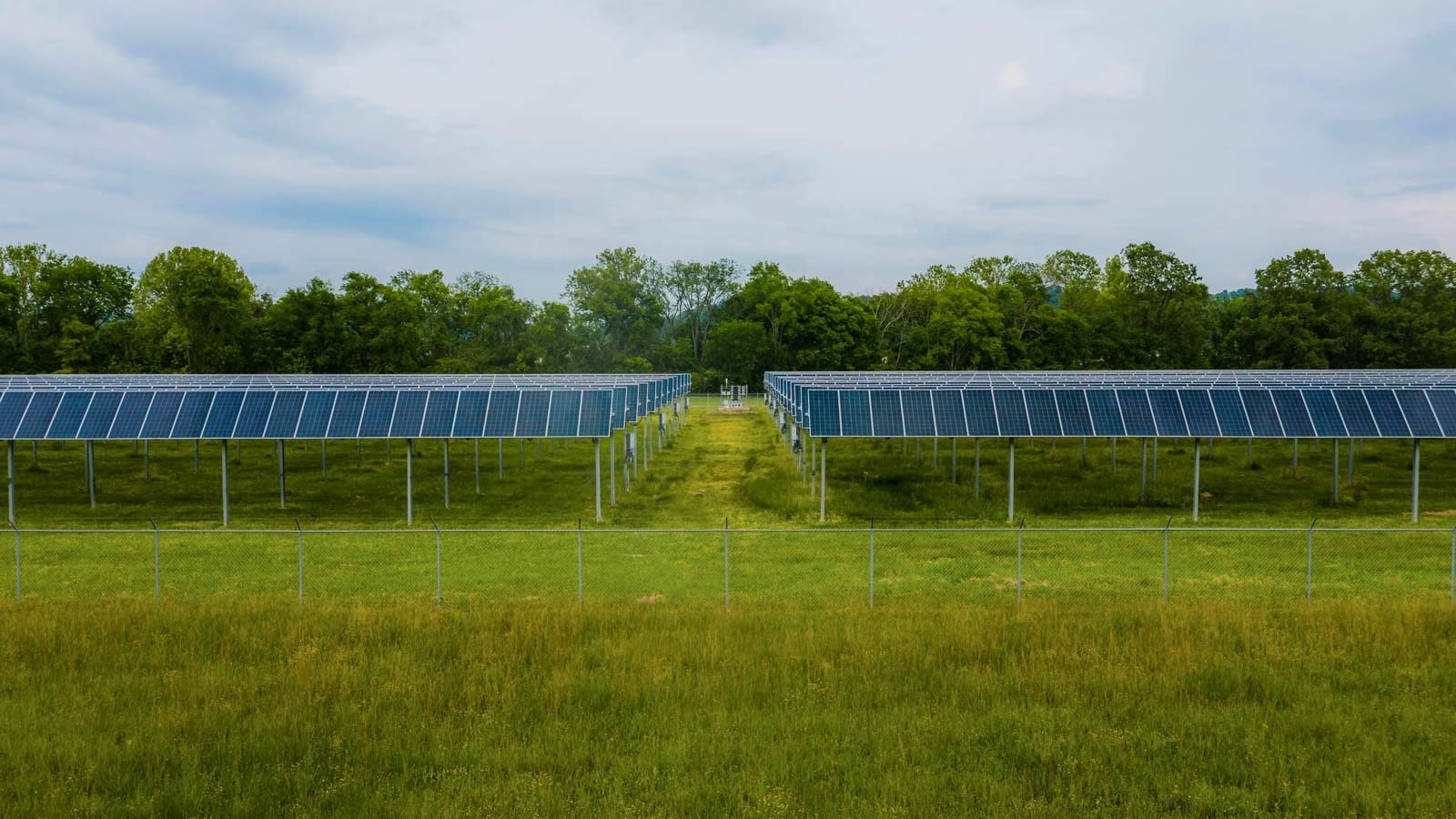
As the world grapples with the dual challenges of increasing food production and combating climate change, a groundbreaking approach is gaining traction: agrivoltaics. This innovative practice involves installing solar panels on the same land used for agriculture, offering a harmonious blend of energy generation and sustainable farming.
A Win-Win for Agriculture and Energy
Agrivoltaics is redefining how we think about land use. By placing solar panels over crops, farmers can achieve dual benefits:
- Partial Shade for Crops: The panels provide much-needed protection against excessive heat, preventing crop stress and conserving soil moisture.
- Cooling Effect for Panels: Crops release water vapor, which helps keep the solar panels cool, improving their efficiency.
This synergy leads to remarkable outcomes. Studies show that crop yields can increase by 20% to 60%, while water consumption decreases by approximately 20%—a critical advantage in regions facing water scarcity.
A Growing Trend
Agrivoltaics is especially effective with shorter crops like herbs, vegetables, and fruits such as strawberries. It’s no surprise, then, that the United States already boasts over 567 agrivoltaic sites, generating a combined 10 GW of power. The Department of Energy forecasts a sharp rise in such projects, with solar energy expected to occupy more than 10 million acres by 2050, predominantly in rural areas.
A Step Towards Sustainable Agriculture
Agrivoltaics fits into the larger Sustainable Agriculture meta-trend, which aims to reduce the environmental footprint of food production. Agriculture accounts for over 25% of global greenhouse gas emissions, making sustainable practices imperative.
Farmers are increasingly adopting eco-friendly methods, with 90% aware of sustainable farming practices. Many are employing reduced- or no-till methods, adjusting fertilizer use, and exploring innovative solutions like biochar fertilizer. Biochar, made by burning organic waste without oxygen, enhances soil nutrient absorption while reducing reliance on chemical fertilizers.
Technology Driving Change
Agtech companies are playing a crucial role in advancing sustainability. Platforms like X Farm provide farmers with real-time data on irrigation and fertilizer needs, minimizing waste and optimizing resource use.
Even large corporations are joining the movement. Candy giant Mars, for instance, runs 27 sustainable agriculture projects spanning 10 countries and over one million acres of farmland.
What Lies Ahead
The intersection of renewable energy and agriculture presents a promising solution to some of the world’s most pressing challenges. Agrivoltaics not only boosts food security but also reduces the carbon footprint of energy and agriculture. As adoption grows, it could reshape the future of farming, proving that innovation and sustainability go hand in hand.
Agrivoltaics is more than a trend—it’s a vital step toward a greener, more resilient planet.