There was a time when the word “hackathon” felt like it belonged almost exclusively to engineers. People imagined late nights, complex code, technical architecture, pizza boxes, and teams racing to make something work before the deadline. And, for a long time, that was mostly true.
But something is changing.
Today, a product hackathon is no longer just a coding marathon. It is becoming a test of how well people understand problems, users, products, data, experience, and business value. It is becoming a place where ideas are not judged only by how technical they are, but by how relevant, useful, and executable they can become.
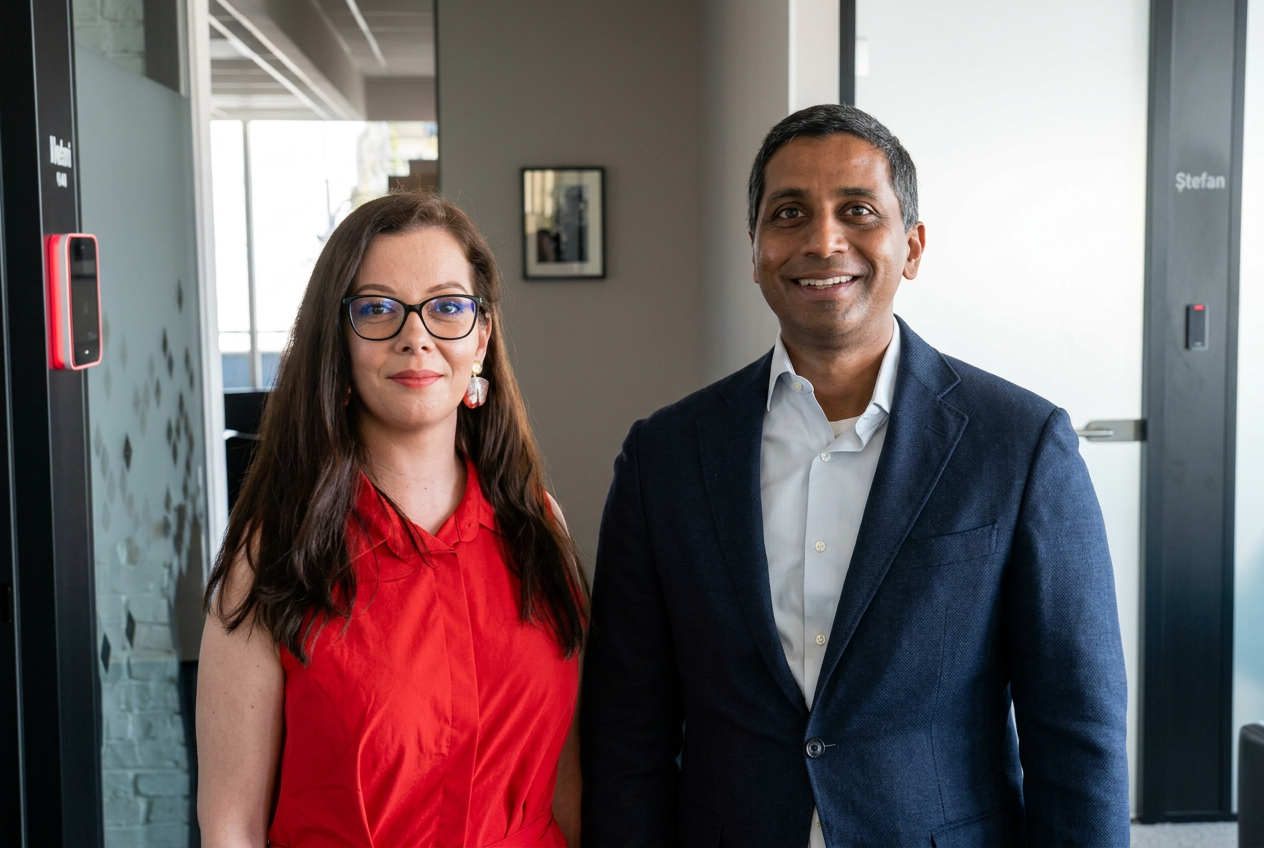
That shift became very clear to me earlier this year, during Publicis Sapient’s Aspire SPEED Hackathon, where I teamed up with my colleague Faiz Mohammed Ali for a 48-hour innovation sprint focused on Strategy, Product, Experience, Engineering, and Data.
The challenge we chose from the five proposed problems was simple in wording, but intense in execution: identify a real problem, shape a solution, use AI-powered tools, build a prototype, and deliver a convincing story in front of judges and leaders.
And then something interesting happened.
As a team of two marketing professionals, not engineers, we won the Aspire SPEED Hackathon. But beyond the personal achievement, the result points to a larger shift: AI is lowering the barriers between having an idea and turning it into something real.
But I think it says something much bigger about where innovation is going.
“The real AI revolution is not simply about automation. It is about amplification – of ideas, talent, and human potential. This experience showed me that the future belongs to people who can connect data with creativity, technology with empathy, and strategy with execution. That is where I see my own journey evolving: becoming a data creative who can translate insight into meaningful experiences and measurable business impact.”, said Faiz, Marketing & Data Strategy at Publicis Sapient.
The Democratization of Building
For years, the distance between having an idea and actually building something was too wide for many people to cross. You could understand the customer. You could see the friction. You could imagine a better experience. But unless you had access to the right technical skills, resources, and development capacity, your idea often remained exactly that: an idea.
And we all know the saying. Many people have ideas. Very few execute them.
AI is starting to change that.
Not by making everyone an engineer. Not by replacing deep technical expertise. And certainly not by removing the need for scalable, secure, production-ready systems. But by lowering the barriers to the first and often most difficult step: starting.
Today, people who understand problems, users, products, processes, and business needs can turn ideas into visible, testable prototypes much faster than before. A marketer can map a user journey, create a product concept, generate a pitch, design a prototype, and test a story. A business analyst can build an AI assistant. A strategist can simulate a future service. A designer can validate an interaction before engineering effort is fully committed.
This is not a small shift. It changes who gets to participate in innovation.
Until recently, many professionals lived with the quiet belief that they were “not technical enough” to build. They could contribute to strategy, communication, research, or positioning, but the building itself belonged somewhere else.
AI challenges that belief.
It gives more people the confidence to move from observation to experimentation. From “someone should build this” to “let me try”. From PowerPoint to prototype. From concept to something others can see, test, and improve.
That does not reduce the value of engineering. In fact, it may make engineering even more important.
Because when more ideas become prototypes, the real challenge becomes knowing which ones deserve to scale. Engineers will remain essential in turning promising concepts into reliable, secure, and sustainable products. But the pipeline of ideas reaching that stage will become richer, more diverse, and probably more human.
This is where cross-disciplinary teams will matter more than ever.
A Glimpse Into the Future
The future will not belong only to the best coders, or only to the best strategists, or only to the best designers. It will belong to people who can connect different worlds. People who understand business context, user behavior, technical possibilities, data signals, and human needs. People who are curious enough to learn new tools and bold enough to use them before they feel completely ready.
That, to me, is the real democratization of AI. It is not just about access to technology. It is about access to possibility.
It is about giving more people the ability to test their thinking. To make their ideas tangible. To fail faster, learn faster, and improve faster.
And maybe, most importantly, it is about changing the psychology of innovation.
Because once people realize they can build, they start thinking differently. They stop waiting for permission. They stop seeing technology as a distant capability owned by someone else. They begin to see it as a language they can use, even if they are still learning the grammar.
A product hackathon won by marketers is not a story about marketers outperforming engineers. It is a story about what happens when AI gives more people the courage to build. About barriers coming down. About disciplines converging. About builders emerging from unexpected places.
And if this is where things are heading, we should expect to see many more ideas brought to life by people who simply dare to use the tools they already have at hand.
Because innovation will no longer belong only to those who know how to code.
It will belong to those who have the curiosity to explore, the courage to experiment, and the determination to build.