
Across industries, from manufacturing to Audio-Visual system design, engineers are still spending a surprising amount of their time on manual CAD operations. Not on innovation. Not on architecture decisions. But on repetitive drawing updates, equipment list adjustments, and documentation alignment. Estimates suggest that up to 40% of engineering time goes into repetitive CAD tasks. In financial terms, that can mean more than $17,000 per engineer per year in lost productivity.
In a world obsessed with AI, automation, and digital transformation, why is such a large part of engineering workflow still manual? That’s exactly the gap Synergy Codes set out to address.
From Excel Sheets to Technical Drawings, Automatically
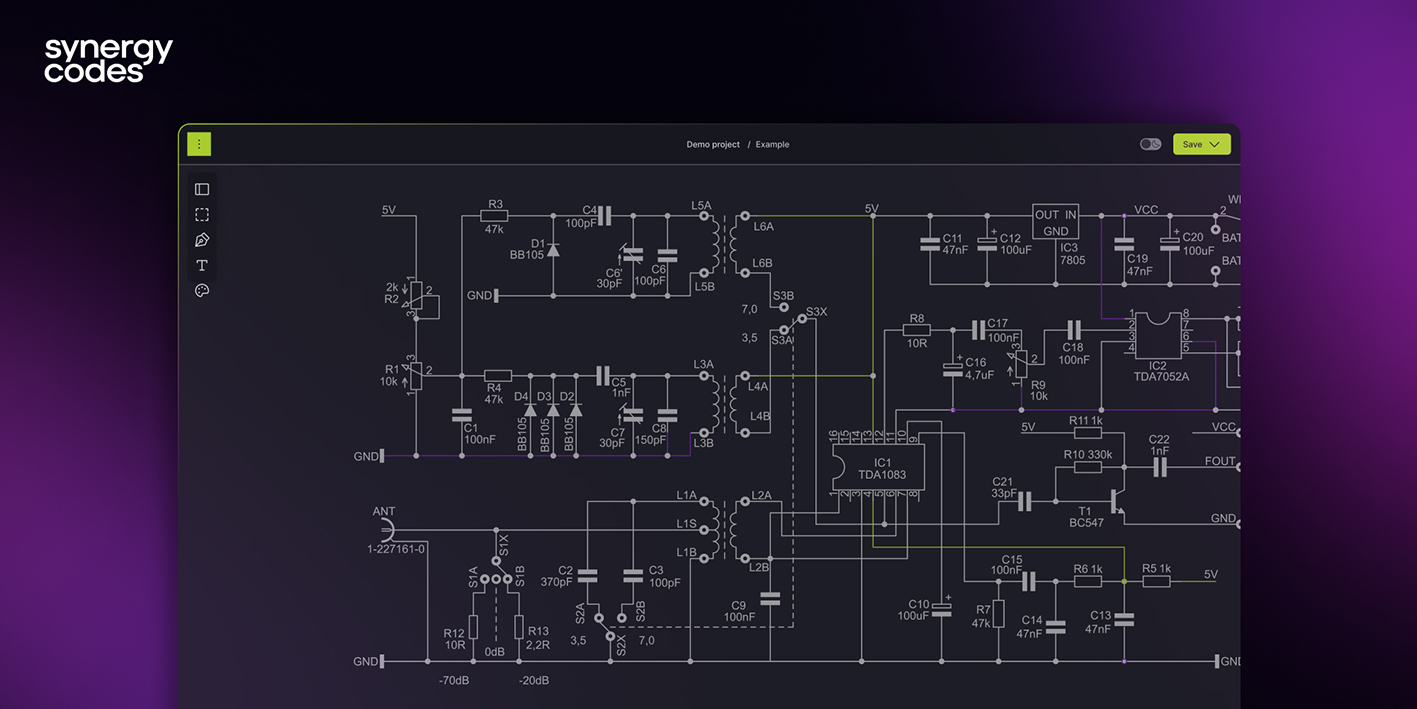
Synergy Codes’ latest solution automatically generates technical drawings and documentation from structured device lists. Instead of manually recreating schematics in CAD, engineers can transform structured data, including Excel files, into fully arranged system diagrams in a single click.
System elements position themselves according to predefined standards. Documentation stays consistent. Equipment lists align automatically.
“Synergy Codes’ automation transforms Excel data into technical drawings, replacing error-prone CAD workflows for engineers. With just a click, engineers can watch system elements arrange themselves according to predefined standards, a true relief for those dealing with repetitive, manual CAD work.”
At its core, this isn’t just about convenience. It’s about workflow modernization.
The Hidden Cost of Manual Engineering
Most companies don’t immediately see CAD repetition as a strategic issue. It’s “just part of the job”. But scale that across teams, across projects, across years, and the cost compounds.
According to Synergy Codes, one client has already reported up to a 20× productivity improvement for engineering drawing tasks after implementing automation.
“This is not surprising, considering that engineers typically spend up to 40% of their time on repetitive CAD operations. By automating these processes, we help teams reclaim valuable engineering time and significantly reduce costs, and we can deliver a tailored Proof of Concept in just 4–6 weeks.”, says Maciej Teska, CEO at Synergy Codes.
In other words: automation doesn’t replace engineers, it removes the friction that prevents them from engineering. Discover more information about CAD automation impact here.
A Real-World Case: AV Design Teams
One of the strongest applications of this automation can be seen in modern Audio-Visual (AV) system design. Traditionally, AV engineers manually create system layouts in AutoCAD, update device lists, adjust diagrams, and prepare proposal-ready documentation, a process that can stretch over days.
With Synergy Codes’ automation tools, teams can:
- Automatically generate system diagrams
- Build and update equipment lists
- Produce shareable documentation
- Prepare ready-to-send proposals
- What once took days can now take minutes.
This is possible because Synergy Codes specializes in engineering applications built around diagrams, graphs, and grids, with deep expertise in domain workflow UX and product architecture. The tools are not generic automation overlays, they are purpose-built for complex engineering environments. Read the full AV case study here.
The Bigger Question
As industries accelerate toward AI-driven operations and smarter infrastructure, engineering workflows are under pressure to evolve.
If automation can eliminate repetitive CAD work —
if documentation can become consistent by default —
if productivity can increase by 20× in specific tasks —
then the real question becomes:
How much innovation is being delayed by outdated engineering workflows?
For teams still relying heavily on manual CAD processes, automation may no longer be a “nice to have”. It may be the competitive advantage hiding in plain sight.