
Nvidia announced two major products at CES in Las Vegas: Alpamayo technology for autonomous vehicles and Vera Rubin chips designed for AI applications.
Alpamayo Technology
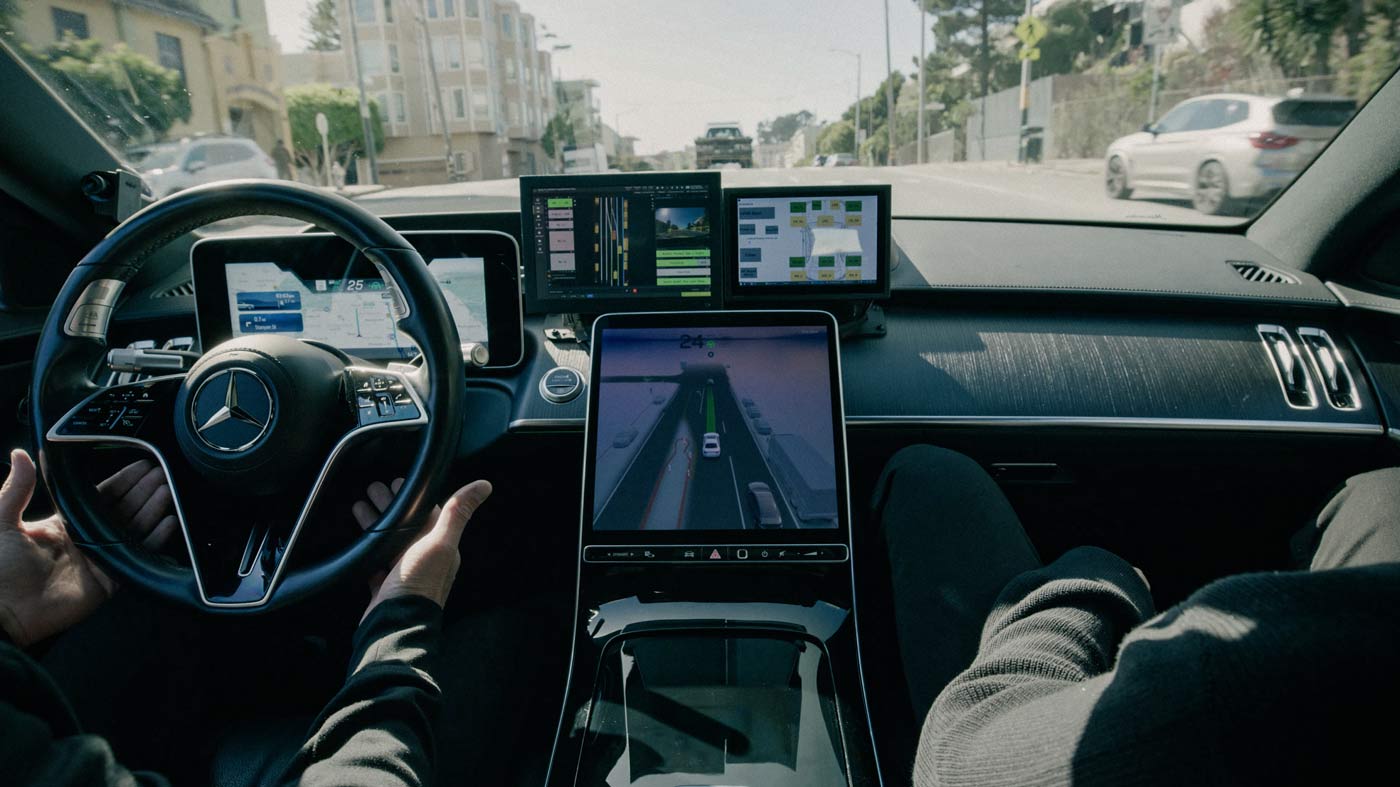
Alpamayo enables autonomous vehicles to handle unpredictable events and complex traffic situations while explaining the reasoning behind decisions. CEO Jensen Huang said the system allows vehicles to think through rare scenarios and drive more naturally based on training from human drivers.
Mercedes-Benz CLA models equipped with the technology are in production and will launch in the US in coming months, followed by Europe and Asia. Demonstrations showed the vehicle navigating urban environments autonomously while avoiding obstacles.
Nvidia made Alpamayo open-source, publishing both the AI model and training data on Hugging Face. Researchers and automotive manufacturers can analyze, test, adapt, and train the system for their needs.
Vera Rubin Chips
The Vera Rubin chip platform is in full production and ships later this year. Nvidia claims it delivers up to five times more computing power for AI applications compared to previous generations.
Vera Rubin is a multi-component platform. A complete server can contain dozens of Nvidia processors, with structures scaling to over 1,000 chips working together. The platform includes “context memory storage” technology to help chatbots retain conversation history.
Market Context
Nvidia dominates the AI training chip market but faces growing competition from clients like Google developing their own chips. Huang emphasized Vera Rubin targets large-scale deployment to hundreds of millions of users, not just AI training.
The announcements position Nvidia beyond chip sales into complete AI platforms spanning data centers, chatbots, autonomous vehicles, and robotics.