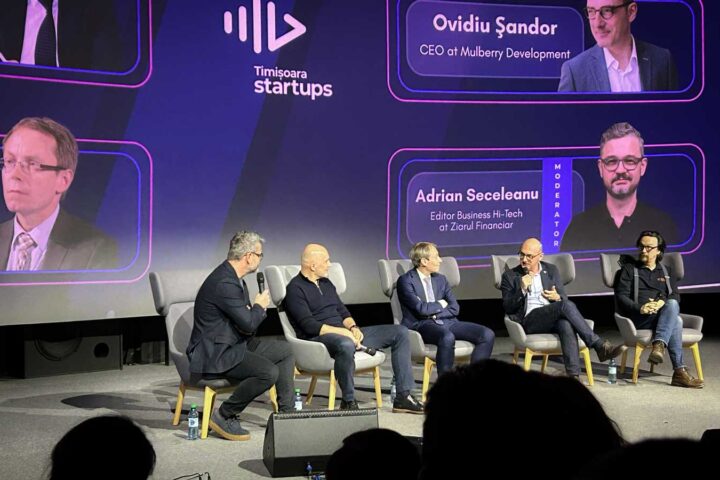
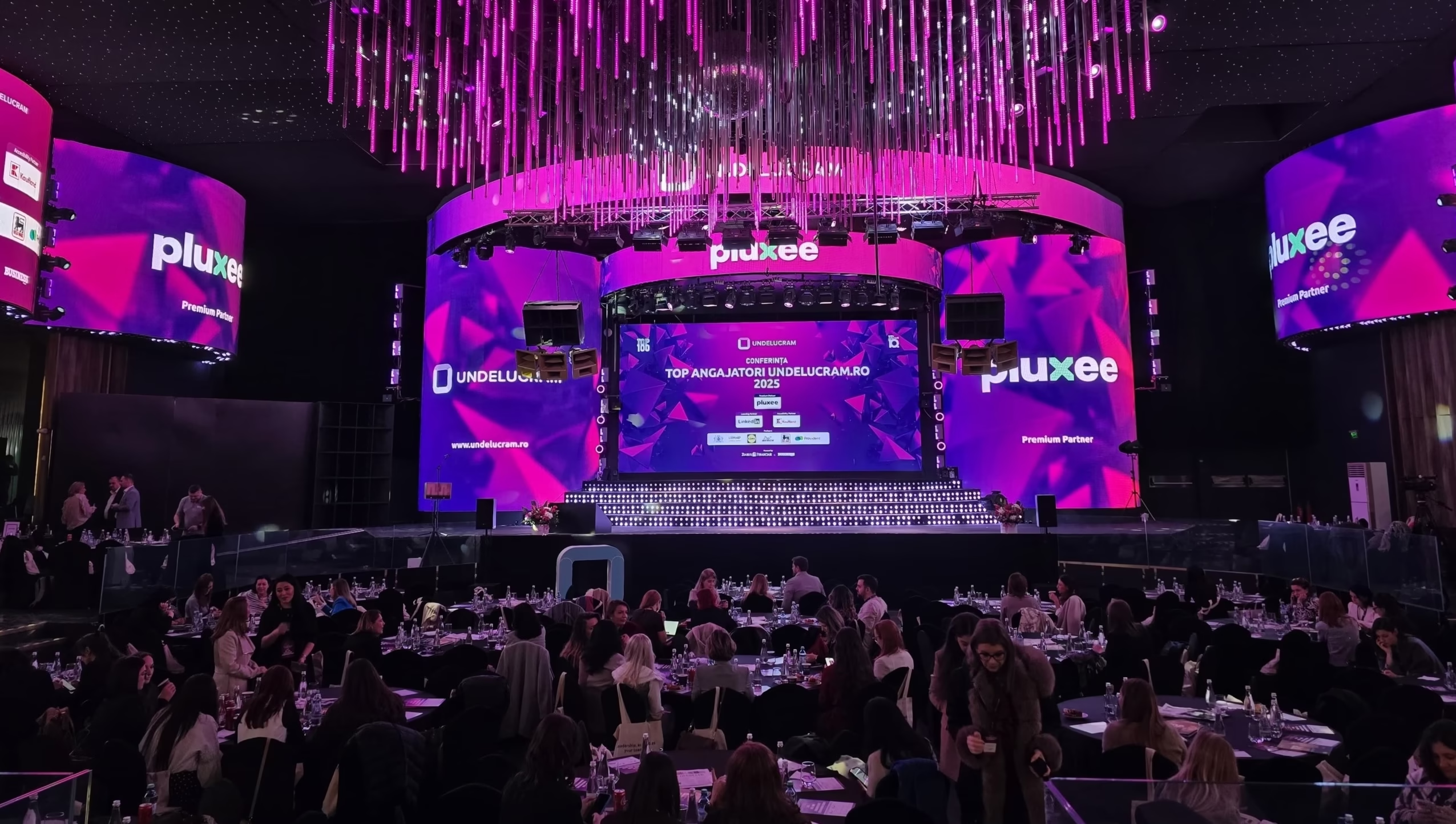
The Romanian job market and workplace culture are undergoing a profound transformation, shaped by digitalization, evolving employee expectations, and the shifting role of leadership. At the Top Employers Conference 2025, organized by Undelucram.ro, industry leaders, HR and Marketing specialists, and business executives explored the trends shaping the future of work, AI’s impact on leadership, and the growing emphasis on employee happiness over engagement.
AI Reshaping Leadership and Workforce Dynamics
One of the key discussions centered on how AI is actively transforming leadership, recruitment, and workforce management. David Whelan, Director CEE, Southern Europe & Israel at LinkedIn, emphasized that leaders today must go beyond decision-making and act as AI change agents, integrating artificial intelligence into workforce management, strategy, and operational efficiency.
With 70% of workplace conversations now driven by Gen Z and Millennials, businesses must adapt to the expectations of a digitally native workforce. Whelan also noted that 38% of global C-suite executives prioritize agility when hiring entry-level candidates, underlining the growing demand for adaptability in a fast-changing job market.
“Soft skills and people skills are now more valuable than technical expertise”, Whelan stated, reinforcing the importance of emotional intelligence and adaptability in leadership. As AI automates routine processes, leaders must focus on fostering a human-centric workplace where innovation thrive.
Employee Happiness vs. Engagement: Why It Matters
A major takeaway was the distinction between employee happiness and engagement, two factors often confused but with distinct impacts on workplace performance:
- Happiness fuels energy and motivation, creating a positive work environment.
- Engagement provides purpose and direction, helping employees stay committed to organizational goals.
According to The Happiness Index, which analyzed data from 170+ countries and over 4 million employees, workplace satisfaction directly correlates with performance.
Key findings included:
- Work relationships scored 7.6, showing strong team collaboration.
- Career growth opportunities were rated 6.2, reflecting employee concerns about professional advancement.
- 48% of employees would not recommend their workplace, indicating a trust gap between employers and employees.
Matthew Phelan, author of The Happiness Index, noted that Romanian employees excel at making difficult tasks look easy but struggle with simpler ones, ranking Romania mid-tier globally in workplace happiness.
Romania’s Job Market in 2024 – Challenges and Opportunities
The Romanian job market remains active but cautious, with hiring trends reflecting economic uncertainty. eJobs.ro reported:
- 291,600 new jobs were posted in 2024, but competition remains fierce with 11 million job applications submitted.
- Most in-demand roles: Entry-level positions (39.6%) dominate job postings, while mid-level professionals (28.7%) remain highly sought after.
- Job seeker demographics: The most active candidates are aged 25-35 (35%) and 18-24 (32.3%), signaling a highly mobile younger workforce.
Despite strong job activity, employer advocacy is declining, with only 57% of employees recommending their company, a 6% drop compared to 2023. Additionally, traditional job fairs have lost their effectiveness, yielding little return on investment, as companies shift to digital hiring strategies.
What Employees Want: Priorities for 2025
With job mobility at an all-time high, employer branding has become a long-term differentiator. Employees are choosing companies, not the other way around. Companies that fail to prioritize employee well-being and career development risk losing talent to competitors who do.
- 78.2% of employees want a higher salary
- 43.4% seek flexible work schedules
- 37.2% prefer remote work
- 35.9% aim for career advancement
- Only 32% of employees would recommend their company
However, 67.6% of employees struggle with adaptability, and 58.8% resist learning new skills – key barriers to career growth.
The Future of Work: Balancing AI and Human-Centric Leadership
AI is rapidly reshaping every aspect of business, from automating recruitment processes to enhancing cybersecurity. Companies like Canpack, with its “Feel the Learning” initiative, showcase how continuous learning can future-proof employees.
Key insights from the conference included:
- AI adoption delivers fast ROI – $3.70 return per $1 spent.
- 85% of Fortune 500 companies now use Microsoft Copilot for workplace automation.
- AI will create 170M new jobs by 2030, necessitating large-scale upskilling efforts.
- Cybercrime costs $10T annually, making AI-driven cybersecurity solutions essential.
Romania stands at a crossroads, as companies must decide whether to lean into AI, invest in employee engagement, and foster a culture of adaptability or risk stagnation. As organizations navigate economic uncertainty, the biggest takeaway from the Top Employers Conference 2025 was clear – leaders who balance AI integration with human-centric workplace strategies will thrive.
From Microsoft’s AI-driven adoption to Canpack’s lifelong learning initiative, successful companies are investing in long-term growth, upskilling, and leadership transformation.
As hiring trends evolve and technology advances, the question remains: Is your organization ready for the future of work?