

The global job market is undergoing a shift. According to the newly released Future of Jobs Report 2025 by the World Economic Forum, 170 million new jobs are projected to emerge by 2030, while 92 million will be displaced. This net increase of 78 million jobs highlights a dynamic landscape driven by technological advancements, demographic changes, economic pressures, and the green transition. However, this transformation also need the urgency for businesses, governments, and educators to address a growing skills gap that threatens to hinder progress.
Key Trends in Job Growth and Displacement
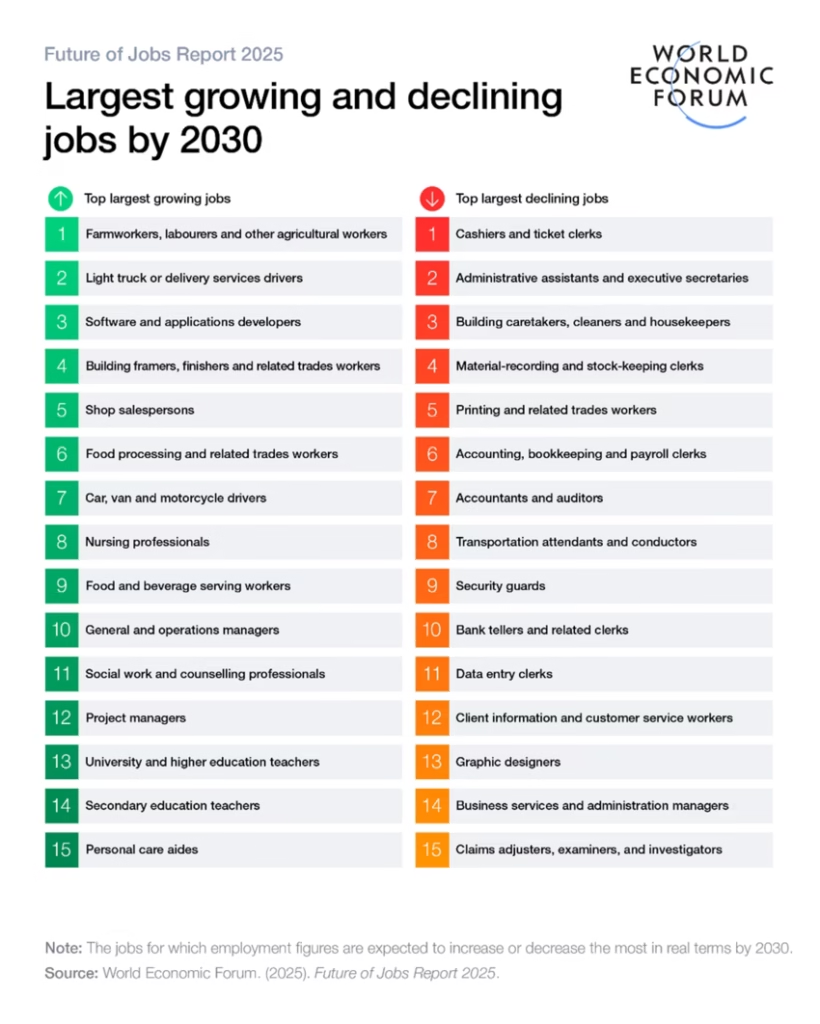
Core economy roles such as delivery drivers, farmworkers, educators, and care providers are expected to expand due to demographic shifts and essential societal needs. Simultaneously, advances in AI, robotics, and renewable energy are creating demand for specialist roles in technology, data, and environmental engineering.
However, not all industries will thrive. Roles such as cashiers, administrative assistants, and even graphic designers face decline as automation and generative AI reshape the labour market. The report emphasizes that while technology eliminates certain jobs, it also creates opportunities for new ones—provided workers are equipped with the necessary skills.
The Rising Importance of Skills
A key finding of the report is that nearly 40% of the skills required for jobs today will change by 2030. Employers cite the skills gap as the most significant barrier to business transformation, with 63% identifying it as a critical challenge.
Fastest Growing Skills by 2030
- Technological Skills: AI, big data, cybersecurity, and network systems.
- Human Skills: Analytical thinking, resilience, collaboration, and creative problem-solving.
The intersection of technological and human skills will define the future workforce. For instance, while AI is set to automate repetitive tasks, human creativity and emotional intelligence will remain irreplaceable in roles requiring leadership, collaboration, and adaptability.
AI: A Double-Edged Sword
The report reveals that half of global employers plan to leverage AI to tap into new opportunities. However, 41% anticipate reducing their workforce as certain tasks become automated. Encouragingly, nearly half of employers aim to transition affected staff into other roles within their organizations, emphasizing the potential for strategic workforce redeployment.
Global Macrotrends Influencing Jobs
- Economic Pressures: The rising cost of living and slower economic growth are driving businesses to adapt. Resilience and flexibility are now essential worker attributes.
- Demographic Shifts: Ageing populations in high-income countries are increasing demand for healthcare professionals, while expanding working-age populations in lower-income regions are boosting demand for educators.
- Geoeconomic Tensions: Trade restrictions and industrial policy shifts are transforming industries, heightening demand for cybersecurity and supply chain resilience.
Urgent Call for Collective Action
The report urges immediate and coordinated action across sectors to bridge the skills gap and prepare workers for tomorrow’s challenges. Key priorities include:
- Reskilling and Upskilling: Investing in training initiatives to ensure workers are equipped with in-demand skills.
- Inclusive Workforce Strategies: Creating accessible pathways to fast-growing jobs, particularly in technology and green industries.
- Collaboration Across Sectors: Governments, businesses, and educators must work together to build a resilient and adaptable global workforce.
Initiatives from the World Economic Forum
To address these challenges, the World Economic Forum is leading efforts such as the Reskilling Revolution, which aims to equip 1 billion people with better skills and opportunities by 2030. Additionally, the Jobs Initiative fosters partnerships among stakeholders to improve job quality and harness the potential of AI and green technology.
Conclusion
The Future of Jobs Report 2025 paints a complex yet optimistic picture of the global labor market. While disruptions are inevitable, they bring with them the promise of innovation and growth. By prioritizing skills development, embracing technology, and fostering collaboration, stakeholders can navigate this transformative era and ensure an equitable, sustainable future for workers worldwide.
For further insights, follow the World Economic Forum’s Annual Meeting 2025 discussions on social media using #WEF25. Access the full report here.